How the Anion Gap Measures
The anion gap is a computed result that assists clinicians in interpreting the balance of charged particles in the blood. It is calculated using common electrolytes on an electrolyte panel and is especially useful when evaluating an acid-base disorder. In practical terms, an anion gap calculator helps reveal whether a patient has excess unmeasured anions, which often points toward metabolic acidosis.
The anion gap is not a direct measurement. Instead, it is a diagnostic aid that adds context to routine laboratory values. Because the body maintains acid-base balance within a narrow range, changes in the gap can suggest a metabolic derangement before other findings become obvious. A widened gap often suggests an acidotic state caused by acids that are not directly measured on standard chemistry testing.
In clinical interpretation, the anion gap is especially useful when used alongside the patient’s symptoms, history, and blood gas analysis. It can aid in recognizing a primary disorder, but it can also reveal a mixed acid-base disorder when the numbers do not fit a simple pattern.
How to Calculate Anion Gap from Lab Values
The standard anion gap formula uses sodium, chloride, and bicarbonate. A typical version is:
Anion gap = sodium - (chloride + bicarbonate)Some clinicians add potassium in the calculation, especially in specific reference methods:
Anion gap = (sodium + potassium) - (chloride + bicarbonate)Because potassium is generally present in a relatively small concentration compared with sodium, many lab reference range conventions omit it. Still, an anion gap calculator may present both approaches, so it is important to know which method is being used.
The calculation depends on precise laboratory values. A low or high number in any part of the electrolyte panel can affect the result. For example, a drop in serum bicarbonate may increase the gap if chloride does not rise proportionally. That pattern is often seen in a metabolic evaluation for acidosis.
In everyday practice, the calculator is practical because it quickly converts laboratory values into a meaningful result. If sodium, chloride, and bicarbonate are available, the tool can estimate whether there is an anion gap elevation and whether that finding matches the clinical picture.
Using an arterial blood gas with the Anion Gap Calculator
An arterial blood gas test, or ABG, provides key physiologic detail to the anion gap result. While the electrolyte panel gives the chemistry behind the gap, the ABG reveals the current acid-base status through pH, PaCO2, and HCO3. Together, these values assist in determining whether the primary disorder is metabolic or respiratory.
When reviewing an ABG, start with the pH. A low pH suggests acidemia, while a high pH suggests alkalemia. Then review PaCO2 and HCO3 to decide whether the abnormality is driven by ventilation or by a metabolic process. If the bicarbonate is low and the anion gap is elevated, the pattern often suggests metabolic acidosis.
This combined approach is especially useful because an ABG can show the body’s response to the primary disorder. A low HCO3 on blood gas analysis may suggest a metabolic process, but the PaCO2 shows you whether respiratory compensation is appropriate. In other words, the ABG helps differentiate the cause from the compensation.
Using an anion gap calculator with ABG results strengthens clinical interpretation because it links the chemistry profile to the patient’s actual acid-base state. A patient may have a low bicarbonate without a major change in pH if compensation is strong, or the pH may remain near normal in a mixed acid-base disorder. That is why the combination of ABG and anion gap is more revealing than either test alone.
Interpreting a Expected vs Elevated Anion Gap
A expected anion gap often suggests that bicarbonate loss is being replaced by chloride, producing a chloride-rich pattern. This is often called non-anion gap metabolic acidosis. Typical causes include gastrointestinal bicarbonate loss and renal tubular disorders, although the exact cause depends on the broader clinical context.
A increased gap, by contrast, usually reflects the accumulation of acids that contribute unmeasured anions. This pattern is known as high anion gap metabolic acidosis. It is the classic setting where an anion gap calculator becomes particularly valuable because it helps identify hidden acid accumulation even before the underlying diagnosis is obvious.
Two major causes of high gap acidosis are lactate acidosis and ketone-related acidosis. Lactic anion gap in chronic kidney disease acidosis can develop when tissue oxygen delivery is impaired or when metabolism is altered by severe illness. Ketoacidosis occurs when ketone production increases and overwhelms buffering capacity, as can happen in diabetes, alcohol-related illness, or starvation.
Normal and increased results should always be interpreted with the patient’s symptoms and laboratory values in mind. A modest elevation may still be important if the patient has severe illness, whereas a normal gap does not completely exclude an acid-base disorder. The key is to connect the number to the rest of the clinical context.
Corrected Anion Gap and Albumin Adjustment
Albumin has a major role in the anion gap because it is a negatively charged protein. If albumin is low, the measured gap may appear deceptively normal even when unmeasured acids are present. That is why many clinicians calculate a corrected anion gap.
The concept of anion gap correction is straightforward: modify the observed result to account for hypoalbuminemia. If albumin is reduced, fewer unmeasured anions are available to contribute to the gap, so the measured value underestimates the true metabolic disturbance. Accounting for albumin improves diagnostic accuracy in metabolic evaluation.
In practice, albumin correction can reveal a occult anion gap elevation. For example, a patient with a seemingly normal gap and low albumin may still have a clinically important metabolic acidosis once the result is adjusted. This is one reason the anion gap calculator is more than a simple arithmetic tool; it is part of deeper clinical follow this link interpretation.
When using the corrected value, remember that the result should be interpreted alongside the rest of the acid-base profile. A corrected gap that is elevated suggests the presence of unmeasured anions and may change the working diagnosis. If the patient’s chemistry does not fit, consider a mixed acid-base disorder as well.
Frequent Reasons of Anion Gap Disturbances
Many disorders can elevate the anion gap, and detecting them helps narrow the diagnostic possibilities. Renal failure is a key cause because impaired kidneys cannot eliminate acids effectively, leading to accumulation of acidic byproducts. In severe kidney dysfunction, this may be associated with uremia, which adds to the gap through trapped toxins and metabolic waste.
Harmful alcohols are another important factor. Ingestion of substances such as methanol or ethylene glycol can lead to marked high anion gap metabolic acidosis. Such cases often need urgent assessment because the acid-base disturbance may get worse quickly and can be life-threatening.
Salicylates are also important because they can create a combined acid-base disorder. Early-stage salicylate toxicity may cause respiratory alkalosis, while subsequent stages may result in metabolic acidosis. This is a typical example where ABG interpretation and anion gap analysis must be used together carefully.
Additional causes include lactate acidosis and ketotic acidosis, each of which is common in acute care settings. These causes are significant because they represent true metabolic strain rather than a laboratory artifact. A elevated gap should always prompt a check of the patient’s clinical history, medications, kidney health, and overall metabolic condition.
ABG Patterns That Help Verify the Diagnosis
ABG patterns offer important confirmation when interpreting the anion gap. If the primary disorder is primary metabolic acidosis, the pH should generally be low and the bicarbonate should be reduced. The PaCO2 should also fall if the lungs are compensating appropriately.
The expected level of compensation can be checked with Winter's formula, which estimates the PaCO2 that should occur in metabolic acidosis. If the measured PaCO2 is higher than expected, there may be an additional respiratory problem causing inadequate respiratory compensation. If it is lower than expected, an extra respiratory process may be present.
This is the way the ABG helps detect a mixed acid-base disorder. For example, a patient with metabolic acidosis and an unexpectedly high PaCO2 may have concurrent hypoventilation. On the other hand, a patient with a high anion gap and very low PaCO2 may also have respiratory alkalosis, which can occur in salicylate toxicity or sepsis.
Combining Winter's formula alongside the anion gap calculator strengthens the overall clinical interpretation. The calculator identifies whether unmeasured anions are elevated, and the ABG shows whether compensation matches the primary metabolic problem. Together, they create a more complete picture of the acid-base disorder.
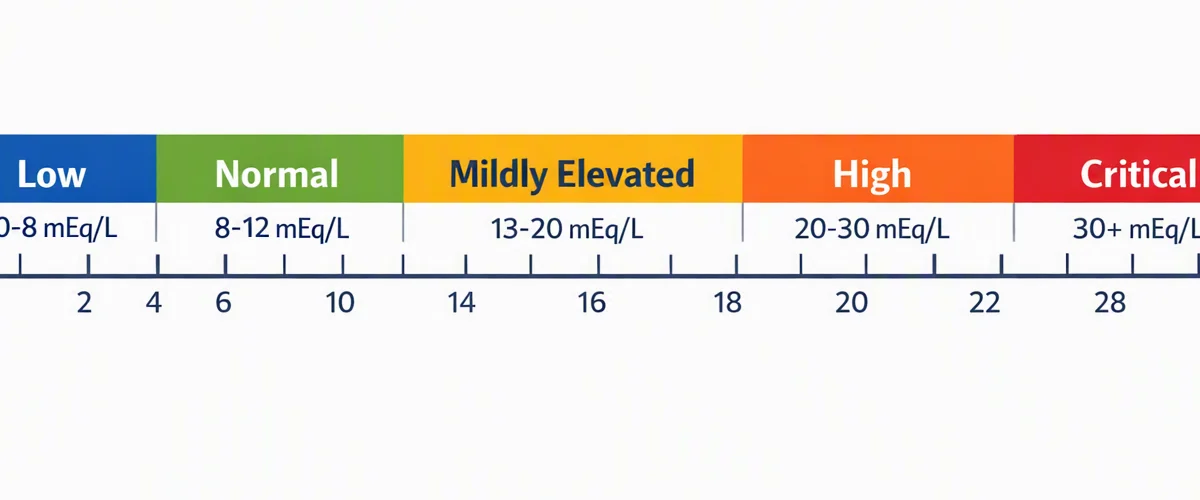
When to Repeat Labs and Seek Urgent Evaluation
Follow-up review is essential when the clinical picture is ambiguous or the result does not correspond to the patient’s condition. Repeat testing may verify a false value, reveal a trend, or show whether treatment is stabilizing the metabolic state. This is especially useful if the initial result suggests a significant acid-base disturbance.
Some findings should trigger urgent attention, especially critical values or rapidly changing laboratory values. Severe acidemia, marked electrolyte shifts, or signs of worsening organ dysfunction may indicate an unstable condition. In those settings, the anion gap should never be interpreted in isolation.
An unexpected gap may also signal a broader electrolyte imbalance or a mixed disorder that needs more evaluation. The best approach is to pair the calculator output with the ABG, the full chemistry panel, and the patient’s presentation. Careful clinical correlation is essential because laboratory numbers do not diagnose the cause by themselves.
If the patient has symptoms such as confusion, rapid breathing, vomiting, or signs of shock, urgent evaluation is warranted. The anion gap calculator can help guide the workup, but it does not replace immediate medical assessment when the physiology suggests a serious condition.
FAQ About the Anion Gap Calculator
What is an anion gap calculator used for?
An anion gap calculator is used to help interpret laboratory values and identify whether there may be a metabolic acidosis caused by unmeasured anions. It is a practical diagnostic aid for lab interpretation, especially when used with an electrolyte panel and ABG data.
How do you interpret anion gap with arterial blood gas results?
Start with the arterial blood gas: check pH, PaCO2, and HCO3 to determine the primary disorder. Then use the anion gap to see whether the acidosis is associated with unmeasured acids. If the pH is low, HCO3 is low, and the gap is elevated, the pattern supports high anion gap metabolic acidosis. Check for respiratory compensation and compare the measured PaCO2 to what Winter's formula predicts.
What is behind a high anion gap on ABG testing?
An elevated anion gap on ABG-associated evaluation often may result from lactic acidosis, ketoacidosis, renal failure, toxic alcohols, salicylates, or uremia. An ABG does not directly show the gap, but it helps confirm the acid-base disorder that often accompanies these conditions.
Why is albumin used to correct the anion gap?
Albumin is a major unmeasured anion in the blood. When albumin is low, the measured gap may underestimate the severity of the acid-base disorder. A corrected anion gap accounts for hypoalbuminemia and increases the accuracy of the clinical interpretation.
Can the anion gap still be normal with metabolic acidosis?
Certainly. A normal anion gap metabolic acidosis can occur when bicarbonate loss is offset by a rise in chloride. This pattern is common in some gastrointestinal or renal causes of acidosis. That is why a normal value does not remove a metabolic acidosis and why the full ABG and chemistry profile are important for proper lab interpretation.